Irregular nouns

Irregular nouns
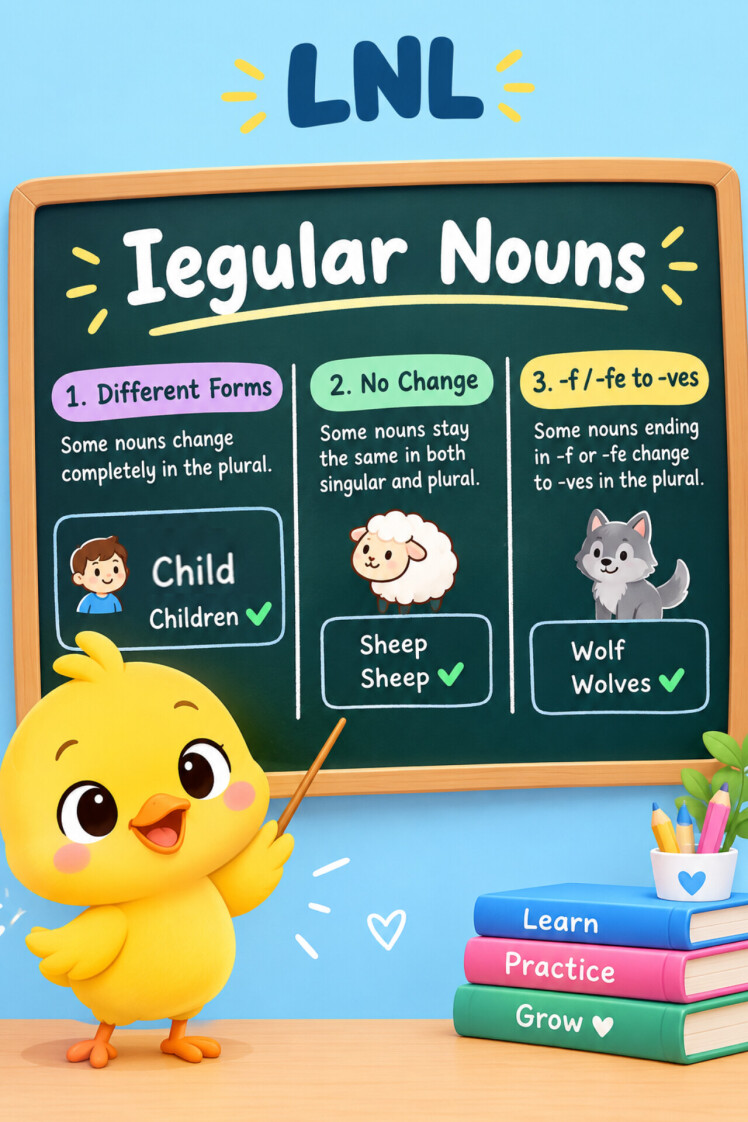
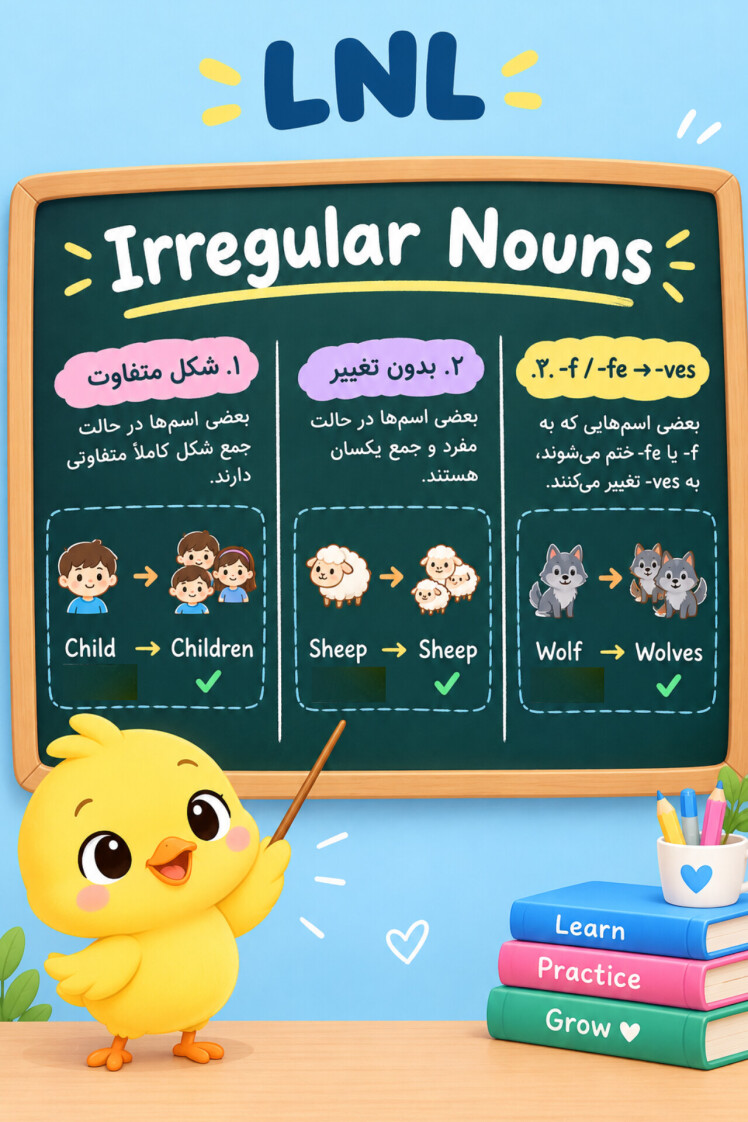
Irregular Nouns   What Are Irregular Nouns?   Most English nouns become plural by adding -s or -es. For example:   * Book → Books * Box → Boxes * Watch → Watches   But some nouns don't follow these rules. They change in different ways when we talk about more than one. These are called irregular nouns.   Common Irregular Nouns   Here are some common examples you should …
Read more

اسم‌های بی‌قاعده در زبان انگلیسی (Irregular Nouns)

اسم‌های بی‌قاعده در زبان انگلیسی (Irregular Nouns)
اسم‌های بی‌قاعده در زبان انگلیسی (Irregular Nouns)   اسم بی‌قاعده چیست؟   در زبان انگلیسی، بیشتر اسم‌ها برای تبدیل شدن به حالت جمع، با اضافه کردن -s یا -es تغییر می‌کنند. برای مثال:   * Book → Books (کتاب ← کتاب‌ها) * Box → Boxes (جعبه ← جعبه‌ها) * Watch → Watches (ساعت مچی ← ساعت‌های مچی)   اما بعضی از اسم‌ها از این قوانین پیروی نمی‌کنند و هنگام جمع …
Read more

Countable and Uncountable Nouns

Countable and Uncountable Nouns
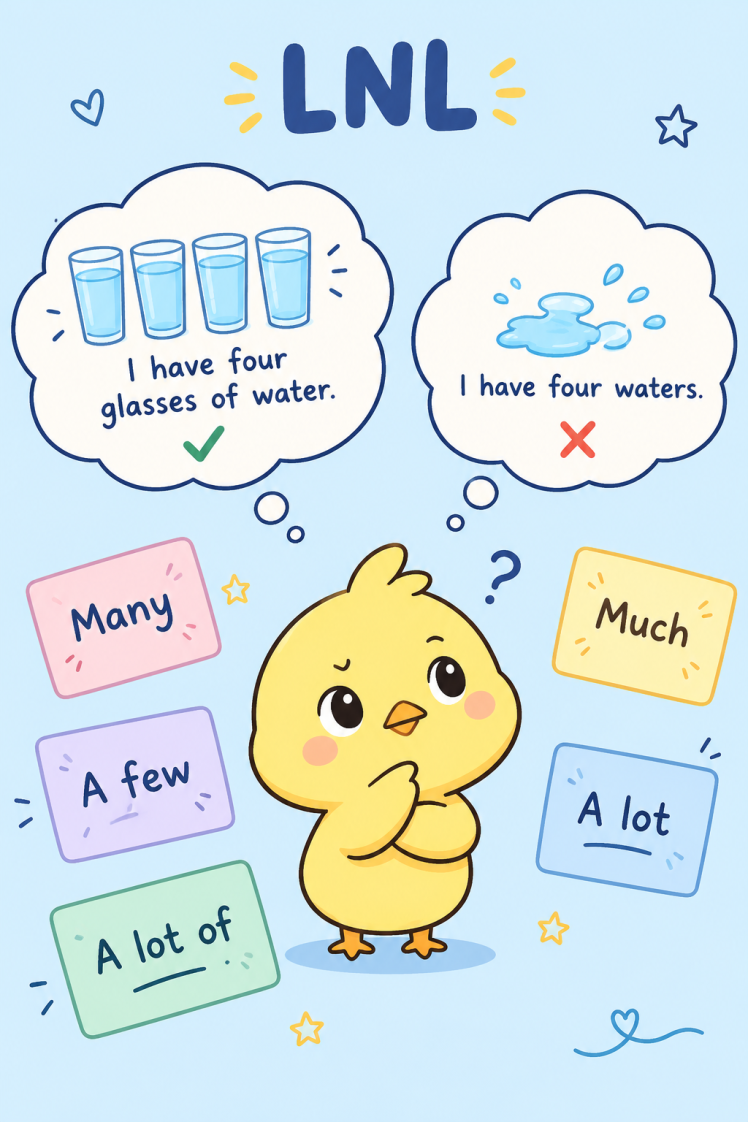
 Countable and Uncountable Nouns   Have you ever wondered why we say “four bottles of water” instead of “four waters”?   Countable nouns are things we can count, such as apples, books, and chairs. They have singular and plural forms.   Uncountable nouns are things we do not usually count individually, such as water, milk, and rice. We can say “a glass of water” or “a bottle of milk.”   …
Read more

اسم‌های قابل‌شمارش و غیرقابل‌شمارش

اسم‌های قابل‌شمارش و غیرقابل‌شمارش
اسم‌های قابل‌شمارش و غیرقابل‌شمارش   تا حالا فکر کرده‌ای چرا می‌گوییم «چهار بطری آب» به‌جای «چهار آب»؟   اسم‌های قابل‌شمارش چیزهایی هستند که می‌توانیم بشماریم؛ مثل سیب، کتاب و صندلی. این اسم‌ها شکل مفرد و جمع دارند.   اسم‌های غیرقابل‌شمارش چیزهایی هستند که معمولاً نمی‌توانیم آن‌ها را به‌صورت جداگانه بشماریم؛ مثل آب، شیر و برنج. برای بیان مقدار این اسم‌ها، معمولاً از واحد یا ظرف استفاده می‌کنیم؛ مثلاً «یک لیوان …
Read more

Talk vs. Speak: What’s the Difference?

Talk vs. Speak: What’s the Difference?
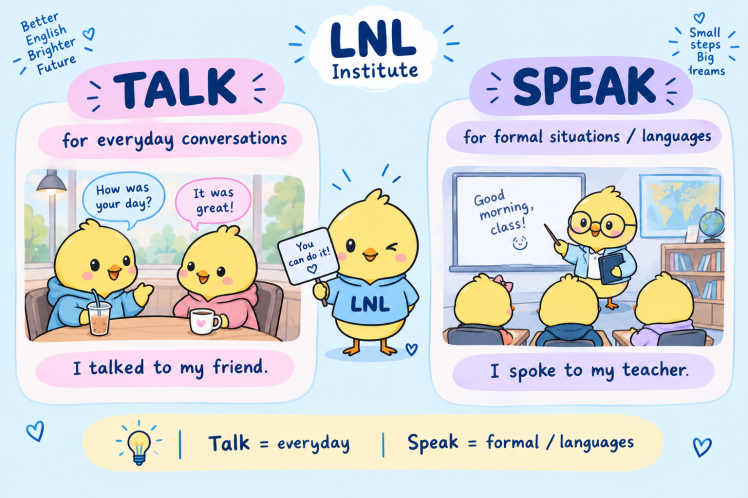
# Talk vs. Speak: What’s the Difference?   Have you ever wondered why we say **“I talked to my friend”** but **“I spoke to my teacher”**?   Both **talk** and **speak** mean to communicate using words, but we use them in slightly different situations. Let’s make the difference simple.   ### A. Talk: Casual and Conversational   **Talk** is usually used for informal conversations, especially when two or more people …
Read more

تفاوت Talk و Speak چیست؟

تفاوت Talk و Speak چیست؟
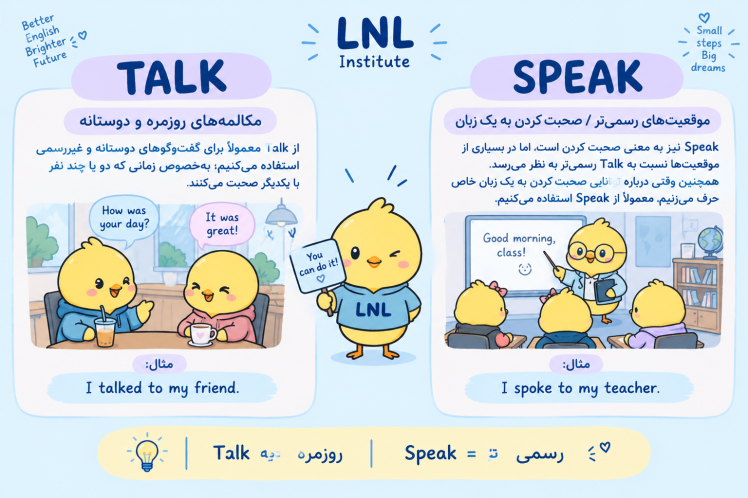
# تفاوت Talk و Speak چیست؟   تا به حال فکر کرده‌اید چرا می‌گوییم **“I talked to my friend”** اما در موقعیتی دیگر می‌گوییم **“I spoke to my teacher”**؟   هر دو فعل **talk** و **speak** به معنی «صحبت کردن» هستند، اما کاربرد آن‌ها دقیقاً یکسان نیست. بیایید این تفاوت را خیلی ساده یاد بگیریم.   ### الف. Talk؛ صحبت کردن در موقعیت‌های روزمره   از **Talk** معمولاً برای گفت‌وگوهای …
Read more

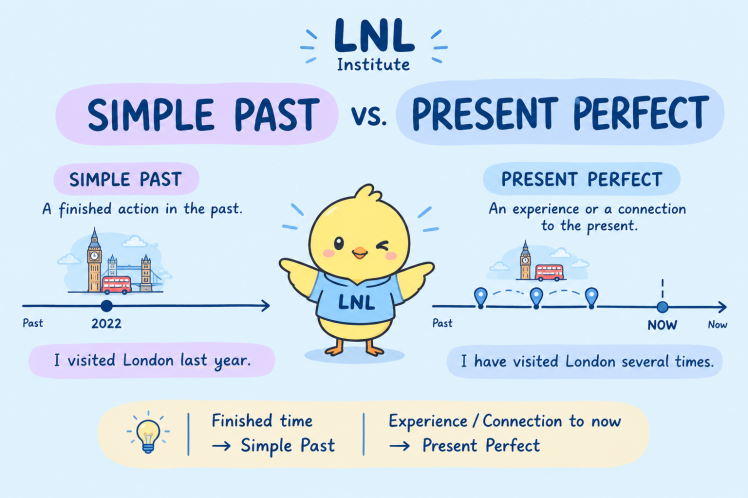
Simple Past vs Present Perfect

Simple Past vs Present Perfect
# Present Perfect vs. Simple Past   Have you ever wondered why we say **“I visited London”** in one sentence but **“I have visited London”** in another?   Both sentences talk about the past, but they have different meanings. Understanding the difference between the **Simple Past** and **Present Perfect** can help you speak and write English more naturally and accurately.   ### A. Simple Past: A Finished Action in the …
Read more

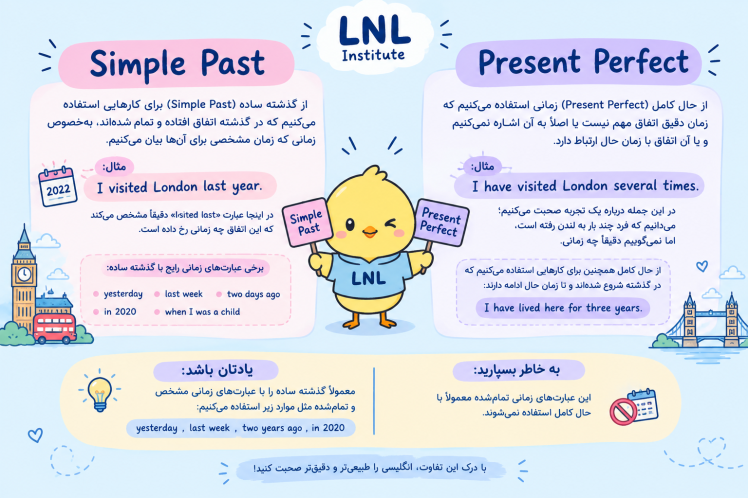
تفاوت simple past و present perfect

تفاوت simple past و present perfect
# تفاوت Present Perfect و Simple Past   تا به حال فکر کرده‌اید چرا در یک جمله می‌گوییم **“I visited London”** اما در جمله‌ای دیگر می‌گوییم **“I have visited London”**؟   هر دو جمله درباره گذشته هستند، اما کاربرد و معنای متفاوتی دارند. شناخت تفاوت بین **Simple Past (گذشته ساده)** و **Present Perfect (حال کامل)** به شما کمک می‌کند هنگام صحبت کردن و نوشتن، انگلیسی را طبیعی‌تر و دقیق‌تر استفاده …
Read more

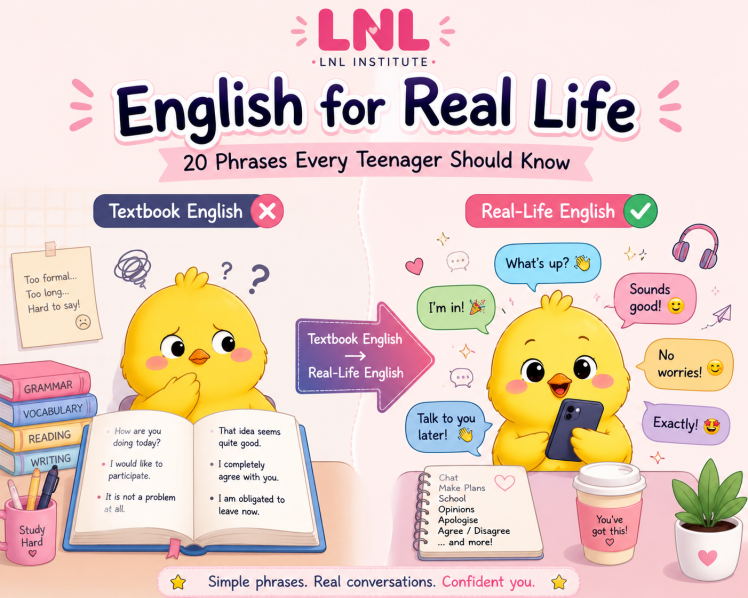
English for Real Life: 20 Phrases Every Teenager Should Know

English for Real Life: 20 Phrases Every Teenager Should Know
# English for Real Life: 20 Phrases Every Teenager Should Know   English textbooks can teach you grammar, vocabulary, and long sentences—but real conversations are often much simpler.   When you text a friend, make plans, share your opinion, apologise, or disagree with someone, you need natural expressions that people actually use.   Here are 20 useful phrases to make your English sound more natural in everyday life.   ## …
Read more

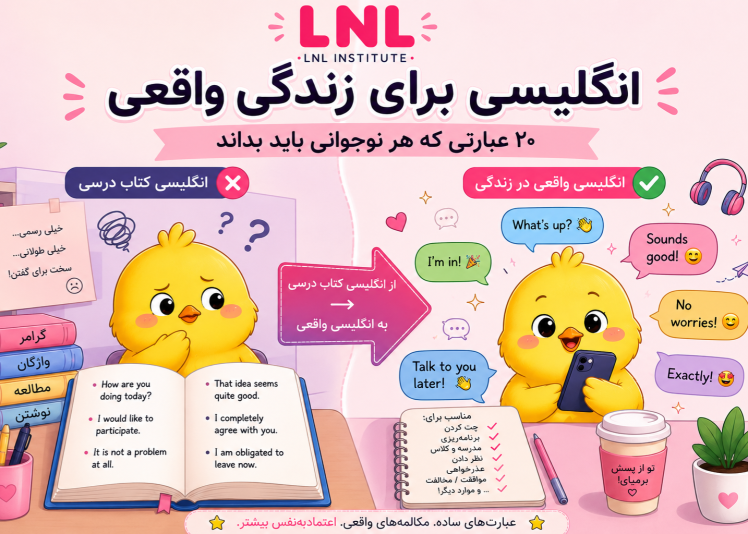
انگلیسی برای زندگی واقعی: ۲۰ عبارتی که هر نوجوانی باید بداند

انگلیسی برای زندگی واقعی: ۲۰ عبارتی که هر نوجوانی باید بداند
# انگلیسی برای زندگی واقعی: ۲۰ عبارتی که هر نوجوانی باید بداند   کتاب‌های انگلیسی می‌توانند گرامر، واژگان و جمله‌های طولانی را به شما یاد بدهند؛ اما گفت‌وگوهای واقعی معمولاً خیلی ساده‌تر هستند.   وقتی به یک دوست پیام می‌دهید، برنامه‌ای می‌چینید، نظر خودتان را بیان می‌کنید، عذرخواهی می‌کنید یا با کسی مخالفت می‌کنید، به عبارت‌های طبیعی‌ای نیاز دارید که مردم واقعاً در زندگی روزمره استفاده می‌کنند.   در اینجا …
Read more

🐥​Blog

​Blog page with interesting texts in my handwriting
Welcome to our page, where we dive into the dynamic world of education and language learning! Here, you'll find insightful discussions on innovative teaching methods, practical solutions to common challenges faced by teenagers, and essential tips for mastering a new language. Whether you're an educator, a student, or simply passionate about personal growth, our content aims to inspire and empower you on your journey. Join us as we explore the intersection of learning and life, and discover strategies that make education engaging and effective

Forgot your password?

Forgot your password? Please enter your mobile number or email address. You will soon receive an email or SMS to create a new password.

Return to the login section

Enter the code you receive.

Return to the login section

Change Password

Change Password

My Account

Orders

View Order